



GI Map Test + Universal Antibiotic Resistance (AR) Genes Panel
GI Map Test + Universal Antibiotic Resistance (AR) Genes Panel
Couldn't load pickup availability
DESCRIPTION
Why Doesn't Anything Work On My Gut?" — Here's the Little Secret 99% of Practitioners Will Never Tell You About...
(And the one stool test that finally puts the answer on paper. No more "let's just try another protocol," and no more six-month detours into yet another supplement stack.)
You've done the rounds. You've done the diets. You've done the probiotics, the elimination protocols, the FODMAPs, the kombucha phase, the "have you tried meditation?" phase, and probably the "let me Google one more thing at 1 a.m." phase too.
You've maybe even done a stool test. Possibly two.
And you're still sitting here.
So let me ask you something nobody else is asking: what if the protocol was never the problem?
What if the reason your last antibiotic round didn't land — or worse, made things weirder — wasn't your provider, wasn't the brand, wasn't the dose, and definitely wasn't you?
What if the answer was sitting in 55 tiny genetic elements inside your gut microbiome — quietly making certain antibiotics about as useful as throwing rocks at a tank?
Here's the deal.
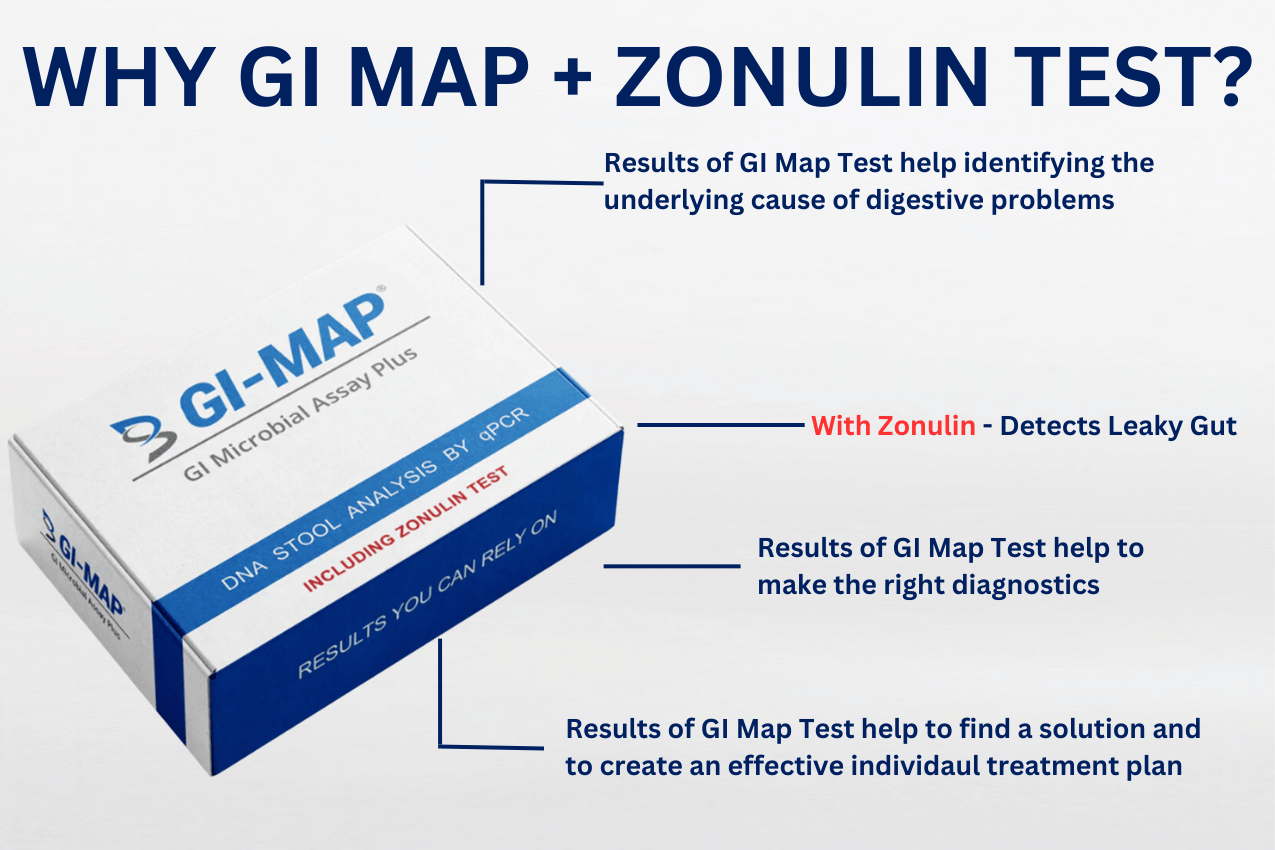
There's a panel called the Universal Antibiotic Resistance Genes Panel. It's an add-on to one specific stool test — the GI-MAP from Diagnostic Solutions Laboratory in the United States. And it screens your gut for 55 genetic elements that are known to make bacteria laugh at 10 different classes of common antibiotics.
Beta-lactams. Macrolides. Tetracyclines. Fluoroquinolones. Vancomycin. Five more.
If even one of those genes is hiding in your sample, your practitioner finally knows something they didn't know before — which is that putting you on that class of antibiotics is the protocol equivalent of bringing a butter knife to a sword fight.
This isn't speculation. The CDC pegs antibiotic-resistant infections at 35,000 American deaths a year and $4.6 billion in healthcare costs. It's everywhere. It's spreading. And almost nobody is testing for it before they prescribe.
And the GI-MAP itself? Tony Robbins literally name-dropped it in his #1 New York Times bestseller Life Force. His exact words:
"Another great company that does biome analysis is called GI Map."
That's a guy with access to the most expensive precision medicine on the planet, telling 5 million readers that this is the test.
Here's what makes it different from every other stool test sitting in your Amazon search history:
It doesn't grow bacteria in a dish. It doesn't squint at your sample under a microscope. It reads the DNA of every organism in your gut using something called qPCR (quantitative polymerase chain reaction) — and Diagnostic Solutions Lab is the only lab in the United States using qPCR exclusively for this kind of comprehensive stool testing. They count genes. With numbers. Validated to FDA standards.
You get a quantified picture of:
- 65+ microbial markers (pathogens, opportunists, normal flora, fungi, yeasts, parasites, H. pylori with its virulence factors)
- Inflammation markers (calprotectin)
- Immune response markers (secretory IgA)
- Digestion markers (pancreatic elastase)
- And — because you ordered the add-on — the 55 antibiotic resistance genes nobody else looks for.
All from one stool sample. Collected at home. In about three minutes. No fasting. No clinic. No awkward.
And here's the part most labs won't bother to tell you:
Raw lab data is brutal to read. Pages of numbers. Latin names. Reference ranges. It looks like the cockpit of a 747 if you weren't trained on it.
That's why every report comes back through an IFDW gut health expert who translates the whole thing into plain English. So instead of staring at "Klebsiella pneumoniae 4.7e3" and trying to Google what that means at midnight, you get an actual human being saying "here's what your data is suggesting, and here's the most logical next step."
That's the whole pitch. Real data. Real translation. Real next step.
No guessing.
No "try this and see."
No more six-month detours.
WHAT'S BEING TESTED
Here's everything in this report. Don't worry... your IFDW gut health expert walks you through your result, if you want to.
GI Map | Bacterial Pathogens (potentially disease-causing)
- Campylobacter
- Clostridium difficile, Toxin A
- Clostridium difficile, Toxin B
- E. coli
- Enterotoxigenic E. coli LT
- Enterotoxigenic E. coli ST
- Shiga-like Toxin E. Coli stx1
- Shiga-like Toxin E. Coli stx2
- Shigella
- Salmonella
- Vibrio cholerae
- Yersinia enterococlitica
GI Map | Viral Pathogens
- Adenovirus 40/41
- Norovirus GI
- Norovirus GII
- Rotavirus A
GI Map | Parasitic Pathogens
- Cryptosporidium
- E. histolytica
- Giardia
GI Map | H. Pylori
- Helicobacter pylori
- Virulence Factor, cagA
- Virulence Factor, vacA
GI Map | Normal Gut Bacteria
- Bacteroides fragilis
- Bifidobacterium spp.
- Enterococcus spp.
- Escherichia spp.
- Lactobacillus spp.
- Akkermansia mucinophila
- Clostridia (class*)
- Faecalibacterium prausnitzii
- Roseburia spp.
GI Map | Opportunistic Bacteria (takes advantage of poor gut health)
- Potential Autoimmune Triggers
- Citrobacter freundii
- Klebsiella pneumoniae
- Proteus spp.
- Proteus mirabilis
- Methanobacteriaceae (family)
- Fusobacterium spp.
- Desulfovibrio spp.
GI Map | Additional Dysbiotic Bacteria
- Morganella spp.
- Pseudomonas spp.
- Pseudomonas aeruginosa
- Staphylococcus spp.
- Streptococcus spp.
GI Map | Parasites
- Blastocystis hominis
- Dientamoeba fragilis
- Endolimax nana
- Entamoeba coli
- Chilomastix mesnelli
- Pentatrichomonas hominis
GI Map | Fungus / Yeast
- Candida albicans
- Candida spp
- Geotrichum spp
- Microsporidium spp.
- Trichosporon spp.
GI Map | Additional Tests
- Secretory IgA
- Anti-gliadin SIgA
- Eosinophil Activation Protein (EPX/EDN)
- Elastase-1
- Calprotectin
- b-Glucuronidase
- Steatocrit
- Fecal Occult Blood
Universal Antibiotic Resistance Genes Panel — 55 genes across 10 antibiotic classes:
- Beta-lactams
- macrolides
- tetracyclines
- fluoroquinolones
- aminoglycosides
- sulfonamides
- vancomycin/glycopeptides
- trimethoprim
- phenicols
- multi-drug efflux pumps
When a resistance gene shows up in your report, that antibiotic class gets flagged. Done. No more guessing which protocol your gut will laugh at.
THE TEST IS FOR YOU, IF...
The Universal Antibiotic Resistance add-on earns its place when one or more of these is true.
You have completed two or more courses of antibiotics in the past three years and your gut symptoms have not settled.
You have been hospitalized.
You have suspected or confirmed H. pylori.
Past protocols seem to make the picture more confusing, not less.
You are considering herbal antimicrobial alternatives and you would like data to inform the decision.
You have already done a basic stool test and the resistance question went unanswered.
If none of the above describes you, the standard GI-MAP Test (Microbial Assay Plus) is the more appropriate starting point and saves you the cost of the add-on.
The GI-MAP base test itself is often considered by people experiencing bloating, gas, abdominal discomfort, diarrhea, constipation, acid reflux, brain fog, skin concerns, mood changes, food sensitivities, fatigue, IBS, IBD, IMO, SIBO, suspected leaky gut, suspected H. pylori, autoimmune-related concerns, and post-antibiotic recovery.
YOUR ADVANTAGES
- Sensitivity. qPCR detects microbial DNA at quantities far below what culture-based methods can identify. You are reading the genome of your gut, not waiting for something to grow on a plate.
- Specificity. The targets are validated to FDA standards. Reproducibility is verified.
- Quantification. You receive numerical results. You can compare them to reference ranges. You can compare them to a future retest. Direction matters.
- One sample. No multi-day collection. No fasting. No medication changes (unless your provider tells you otherwise).
- Plain-English interpretation (optional). A complete lab report is reviewed by an IFDW gut health expert and translated into language you can act on.
- A logical pathway, not a stack of numbers. The interpretation is the foundation for any next step — whether that means refining a protocol with your practitioner, considering herbal antimicrobials, or moving into the IBS Exit Program for structured implementation support.
HOW IT WORKS
- Order. The kit ships to your door within 1–3 business days. Free U.S. shipping.
- Collect. A single stool sample, at home, on your schedule. Illustrated instructions in the box. The collection itself takes a few minutes.
- Return. Drop the prepaid FedEx envelope at any FedEx box. Allow 3–5 business days for the lab to receive it.
- Receive your report. Lab turnaround is typically 7–10 business days. Results appear in your secure IFDW Client Portal.
- Get clarity. If you have added the Expert Video Interpretation, an IFDW gut health expert walks you through the report in plain English.
TEST KIT INCLUDES
GI-MAP collection device with stabilizer · sampling spoon and transport vial · biohazard specimen bag · illustrated step-by-step instructions · lab requisition form · prepaid FedEx return envelope.
Included with your IFDW order:
Universal Antibiotic Resistance Genes Panel processing (55 genes across 10 antibiotic classes) · full GI-MAP report from Diagnostic Solutions Laboratory · secure access to your IFDW Client Portal · no prescription requirement · free Symptom Diary eBook valued at $27 · optional Expert Video Interpretation by an IFDW gut health expert.
This test is not a replacement for medical care. Please consult your healthcare provider for diagnosis and treatment.
- In Stock. Ships within 2-3 days.
- US Made - Tests conducted by US Labs
- Results within 10 to 15 business days
- Fast (2-3 days) & Free shipping and prepaid return shipping included




We are here to help
FAQ - Answers To Your Questions
What is GI Map testing?
GI Map (Gastrointestinal Microbial Assay Plus) analysis focuses on the genetic material of microorganisms in the gastrointestinal tract.
GI Map Testing is an advanced clinical evaluation that is considered as a state of the art for characterization of gut microbial population metabolism.
This test gives an impression of the overall gut microbiota not only of the bacteria but also of the parasites, viruses, and funguses present with several indicators related to the gut health status and functions.
Who can benefit from GI Map testing?
GI Map testing can be used by anyone that has gastrointestinal complaints, autoimmune disease, inflammatory bowel disease IBD, or anyone who aims to push their overall health into high performance.
How is the GI Map test conducted?
Stool material from the client is collected as the test sample for the test. The specimen is however taken and forwarded for processing by an expert in a laboratory.
The output describes how many of each species of gut microorganism are present.
What are the sample collection requirements?
All our collection kits come with clear and concise instructions.
Why Is quantification using qPCR Technology so important?
qPCR offers a much more accurate and reliable result. This allows experts to study and determine the clinical significance of the microorganisms far more than the use of standard PCR, culturing, microscopy or sequencing approaches.
In practical terms, there is a need for a practitioner to find out just how many pathogenic organisms or pathogenic dysbiosis patterns are contained within the stool sample of the client being diagnosed.
How do I interpret the GI Map Microbiome Stool Test Results?
We recommend you discuss your quantitative results with an IFDW Expert for a comprehensive stool analysis.
What are the specimen requirements, and do I need to prepare fast?
What to do: Single Stool Sample – Ambient room temperature in specimen vial provided.
And there is no need to prepare or fast before testing.
What does dl signify on the GI-MAP Report mean?
< dl indicates "less than the detectable limit."
Do I need to stop taking any of my medications before I Collect My GI-MAP sample?
No. Please continue taking all medications unless otherwise directed by your provider.
These instructions may vary by provider so you may want to check with your provider. They may also have dietary restrictions as well depending on the testing.
Is the Client responsible for postage?
No, collection kits include a pre-paid 2 business day FedEx return label if mailed within the U.S.
Can I drop off my Collection Kit at a local FedEx office?
Yes, please follow the packing and shipping instructions provided with the collection kit.
Your tracking number can be found on the Return Label. Please keep this tracking number for sample tracking purposes.
The postage-paid envelope can be dropped off at any Fed Ex Drop Box, but ensure that the drop box is cleared within the same day or the next day. We only require that the specimen be received within 10 days after collection.
How accurate is GI Map testing?
Experts in the field rate the GI Map testing as very accurate and dependable. It employs improved molecular diagnostic procedures to detect the presence of microorganisms within the gastrointestinal tract, hence an effective improvement on traditional diagnosis.
How often should GI Map testing be repeated?
The number of tests done is wholly dependent on health status and specific problems that are being solved.
After an intervention is done, for example, gastrointestinal practitioners may suggest follow-up tests to determine how effective the intervention was and look at changes that have happened over time with the gut microflora.
Protocols are typically followed for 3 months and retesting is done between 2-4 weeks after the protocol has been completed.
How long does it take to get my results?
After sending (FEDEX) your sample, give it 3-5 business days for the specimen to arrive at the lab. Results will be released roughly within 7 to 10 working days although on some odd occasions it may take three weeks.
How do I get my GI MAP test results?
When test results are ready they’ll be available to you in your client account at https://ifdw.org/pages/login-client-portal. You need to activate your account in order to view these results.
Right after the test was ordered, a letter with an invitation for account activation should have been sent to your email address.
Please check your inbox and also look in your spam folder if you haven’t seen the email yet.
Can I have someone do a review or consultation of my GI Map test results with me?
Yes. You can purchase the GI Map and request a Result Consultation.
Just choose the “With Result Consultation” option above when making the purchase.
We highly recommend talking to an IFDW Expert about your results as they are quite difficult to interpret.